
Gain practical insights into Containerisierung Docker Kubernetes deployments. Learn real-world strategies for robust, scalable applications.
Adopting containerization has fundamentally changed how we build and operate software. Moving beyond basic Docker images to orchestrated Kubernetes clusters demands a pragmatic approach. My experience over years, across various industries, has shown that true mastery comes from tackling real-world complexities, not just theoretical concepts. This involves practical choices, iterative refinements, and a deep understanding of operational realities.
Overview
- Containerization simplifies application packaging and environment consistency.
- Docker provides the essential tools for creating and managing individual containers.
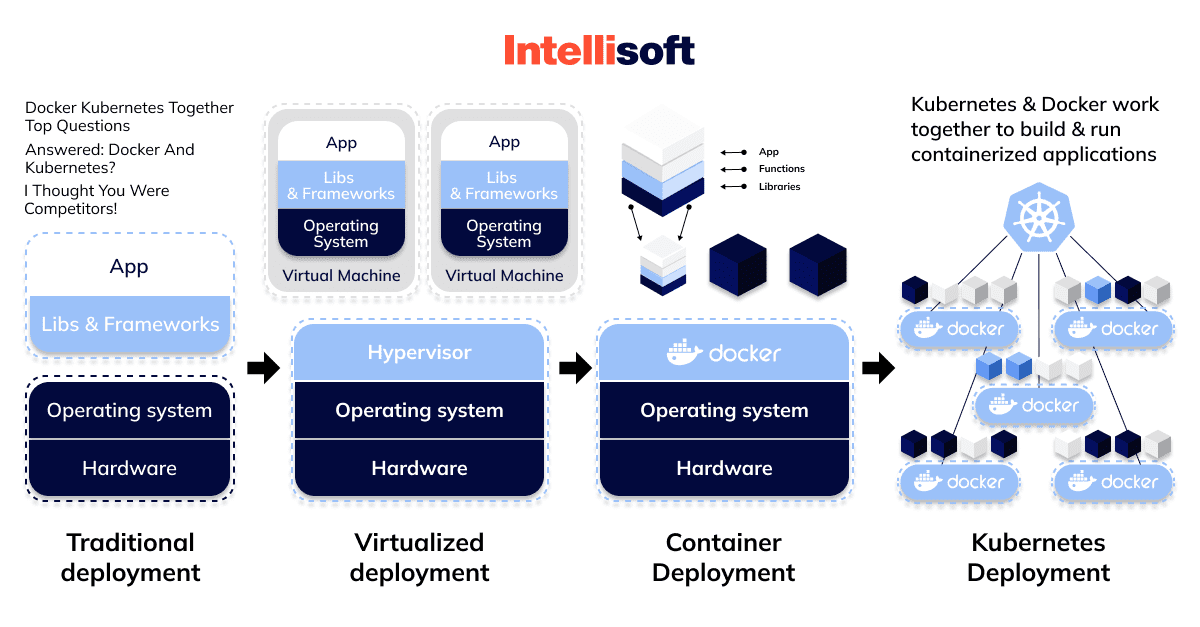
- Kubernetes orchestrates these containers at scale, managing their lifecycle and interactions.
- Real-world deployments require careful planning for networking, storage, and security.
- CI/CD pipelines are crucial for automating builds, testing, and deployments to Kubernetes.
- Monitoring, logging, and observability are non-negotiable for production stability.
- Future-proofing involves adopting advanced patterns like service meshes and serverless functions.
- Cost optimization and governance are key ongoing considerations for cloud-native infrastructure.
Setting the Foundation: Effective Containerisierung Docker Kubernetes Strategies
Starting with a solid foundation is paramount. Our journey typically begins with Dockerizing existing applications. This involves writing efficient Dockerfiles, using multi-stage builds to reduce image size, and implementing best practices like non-root users. We often see teams struggle with bloated images or insecure configurations in early stages. A clean .dockerignore file, for instance, prevents unnecessary files from entering the image, shrinking its footprint.
Choosing the right base image—like Alpine for minimal size or official language images for specific runtimes—makes a significant difference. From there, understanding Docker Compose for local development provides a stepping stone. It simulates a multi-service environment without the full complexity of Kubernetes. This hands-on experience with service definitions and networking within a localized scope proves invaluable before migrating to a larger orchestrator. These initial steps are critical for successful Containerisierung Docker Kubernetes adoption.
Orchestration Challenges and Solutions in Production Environments
Transitioning from local Docker environments to Kubernetes in production introduces new dimensions of complexity. Networking between microservices, managing persistent storage for stateful applications, and ensuring robust security are common hurdles. For networking, leveraging Kubernetes Services and Ingress controllers correctly becomes vital. An Ingress can manage external access, routing traffic based on hostnames or paths.
Persistent storage often requires careful consideration of Persistent Volumes (PVs) and Persistent Volume Claims (PVCs), especially when dealing with databases or message queues. Solutions include cloud-provider specific storage classes or technologies like Rook for on-premise setups. Security context constraints, network policies, and proper RBAC (Role-Based Access Control) are non-negotiable. We’ve seen many companies, including those in the US, dedicate significant effort to hardening their clusters against potential threats. Tools like Helm simplify packaging and deploying applications, making it easier to manage configurations across environments.
Real-World Deployments with Containerisierung Docker Kubernetes
Our experience shows that successful deployments are rarely a “set it and forget it” affair. They demand robust CI/CD pipelines and a strong GitOps methodology. For instance, using tools like Argo CD or Flux for continuous delivery ensures that the desired state defined in Git always matches the cluster’s actual state. This significantly reduces manual errors and improves auditability.
Monitoring and observability are crucial. Integrating Prometheus for metrics, Grafana for visualization, and Loki or Elasticsearch for centralized logging helps teams quickly identify and resolve issues. Alerts must be well-defined and actionable, preventing alert fatigue. Setting up traces with Jaeger or Zipkin provides deep insights into request flows across distributed services. These systems collectively provide the necessary visibility for managing applications deployed via Containerisierung Docker Kubernetes at scale, ensuring reliability and performance.
Future-Proofing Your Infrastructure: Evolving Your Container Strategy
The landscape of container technology is constantly evolving. Future-proofing your infrastructure means staying adaptable and open to new advancements. Service meshes like Istio or Linkerd can provide advanced traffic management, security policies, and observability features without modifying application code. This is particularly useful for complex microservice architectures.
Exploring serverless container options, such as AWS Fargate or Google Cloud Run, can further abstract infrastructure management, allowing teams to focus solely on their application logic. Edge deployments, bringing containers closer to users or data sources, are also gaining traction for low-latency applications. Regularly reviewing your infrastructure for cost optimization, perhaps by rightsizing resources or leveraging spot instances, is also essential. Continuous learning and iterative improvement are the hallmarks of a resilient containerization strategy.


